
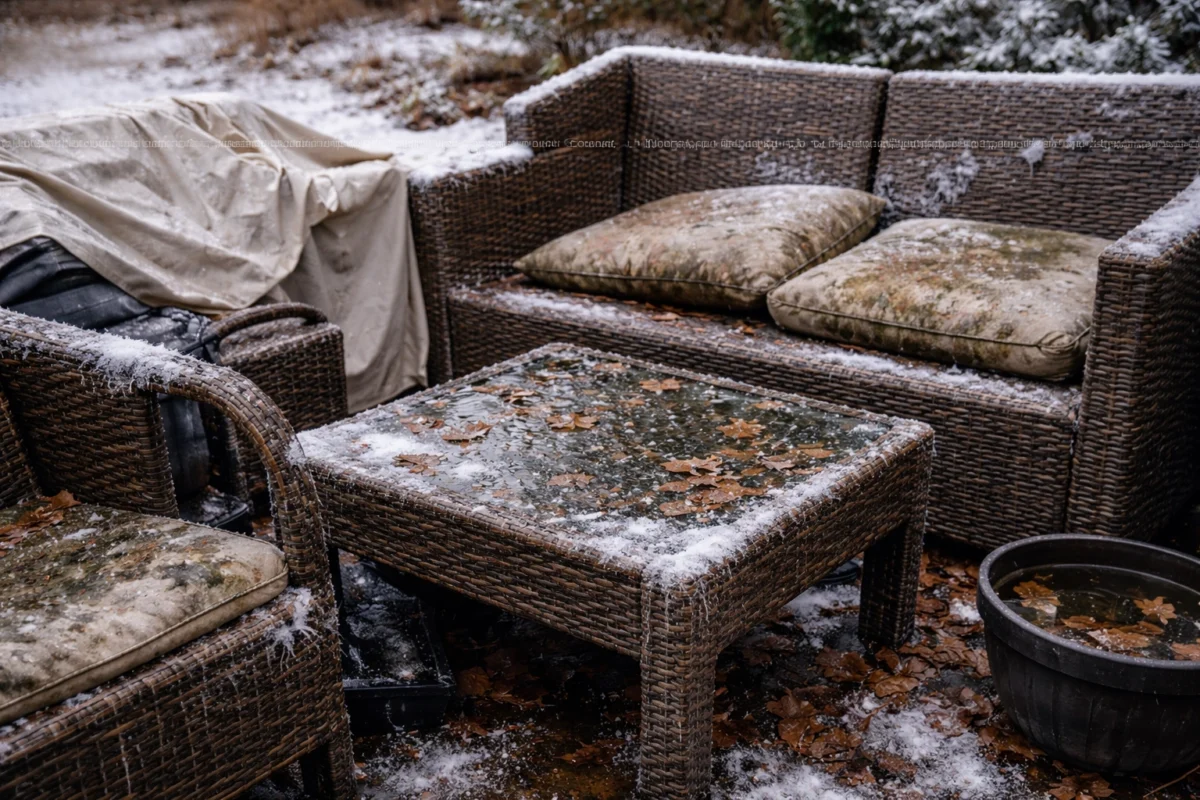
If you have ever looked at your garden set in late autumn and wondered whether you can simply leave it outside until spring, you are not alone. It is one of the most common questions homeowners ask when the weather starts turning cold, wet and unpredictable. The short answer is that some rattan furniture can stay outside in winter, but that answer only becomes useful when you understand what kind of rattan you own, what British winter actually does to outdoor furniture, and what simple actions can dramatically extend the life of your pieces. 🍂
Many people assume all rattan is the same, yet that is where costly mistakes usually begin. Natural rattan and synthetic rattan may look similar at first glance, but they do not behave the same way when exposed to repeated rain, frost, humidity and temperature swings. One may cope reasonably well when properly protected, while the other can weaken, fade or deteriorate much faster if left untreated. That is why a good article on this subject should not only say “yes” or “no”, but explain the real conditions behind the answer in a way that is practical, reassuring and easy to apply.
In this guide, we are going to go much further than a quick summary. We will look at how winter affects rattan furniture, which materials are more suitable for outdoor use, what kind of protection genuinely helps, what many owners get wrong, and when it is worth bringing furniture under cover instead of taking the risk. We will also compare different winter scenarios, answer the questions buyers genuinely ask, and show you how the same principles of material care and woven structure can matter across the wider wicker world, from decorative home pieces to practical organisers such as Wicker Storage Baskets.
If you are also comparing this topic with traditional wicker, you may want to explore our related article Can You Leave Wicker Outside in Winter?, which complements this guide from a slightly different angle and helps reinforce the difference between indoor-style woven materials and weather-exposed furniture.
Quick Answer: Can You Leave Rattan Furniture Outside in Winter?

Yes, synthetic rattan furniture can often be left outside in winter, but only if it is designed for outdoor use and is given sensible protection. That means a solid frame, weather-resistant weave, breathable cover where appropriate, and ideally a location that is not exposed to standing water, constant freezing moisture or extreme wind. In contrast, natural rattan should generally not be left outside throughout winter, because prolonged damp and cold can slowly damage the fibres and reduce the lifespan of the furniture.
The reason this question is so important is simple: winter does not usually ruin furniture in one dramatic moment. Instead, it causes a slow build-up of stress. Moisture settles into joints and surfaces, cold makes materials contract, dirt accumulates in the weave, and repeated wet-dry cycles gradually wear pieces down. So while it may seem harmless to leave furniture outside “just for a season”, the result by spring can be faded weave, brittle strands, weakened frames, mildew marks or cushions that never quite recover.
The smartest approach is to think in terms of risk reduction rather than blind confidence. If your rattan set is premium outdoor synthetic rattan on an aluminium frame and positioned on a dry patio with a good breathable cover, you are in a far stronger position than someone leaving natural woven furniture in an exposed garden corner with water pooling around the legs for months.
The Difference Between Natural and Synthetic Rattan
To make good decisions in winter, you first need to separate two materials that people often group together too casually. Natural rattan is a plant-based material. It has warmth, character and texture that many people love, especially for indoor furniture and decorative pieces. It can look beautifully organic and timeless, but it is not naturally built for months of cold moisture and outdoor exposure. Over time, damp conditions can encourage swelling, weakening, discolouration and mould-related issues if the furniture is left unprotected.
Synthetic rattan, on the other hand, is usually made from weather-resistant resin or polyethylene woven around a metal frame. It is specifically created to imitate the look of natural rattan while performing better outdoors. That does not mean it is indestructible. It still needs care, and lower-quality versions can crack, fade or sag over time. But as a category, synthetic rattan is far better suited to a British winter than natural rattan.
This distinction matters because many negative experiences come from confusion. Someone buys a woven chair, sees the word “rattan”, and assumes all care advice applies equally. In reality, the right winter strategy depends on the exact material, the quality of construction and the degree of weather exposure. A blanket answer is too simplistic. A useful answer must account for the furniture itself, the environment around it and the habits of the owner.
Good outdoor furniture lasts longer not because it avoids weather completely, but because it is matched correctly to weather, placement and maintenance.
What Winter Actually Does to Rattan Furniture
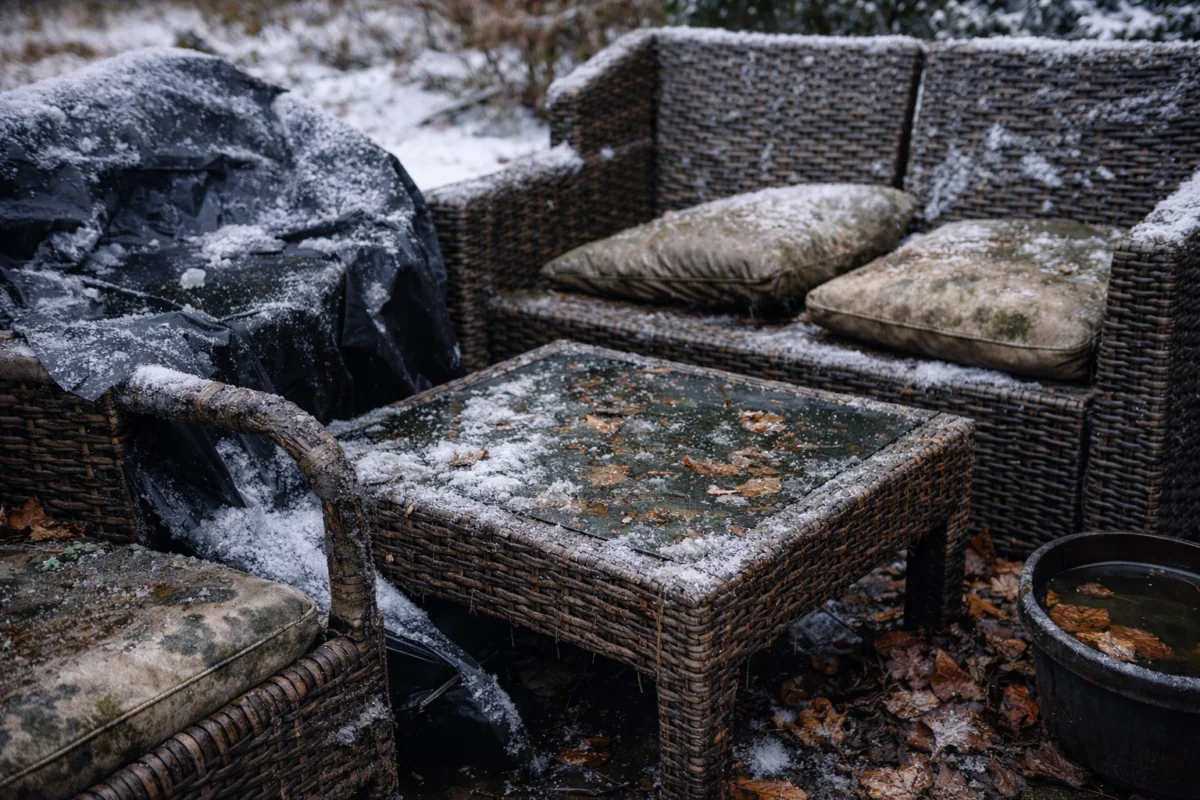
Winter damage is rarely about one factor alone. It is usually the combination of rain, damp air, frost, dirt, low sun, mould risk and neglect that creates the problem. A lot of people think only snow matters, but in the UK, constant moisture and repeated freeze-thaw cycles are often more relevant than dramatic snowfall. Furniture that stays damp for long periods can begin to show wear at pressure points, joints and woven bends.
On synthetic rattan, the main issues often include trapped moisture, grime build-up, cover misuse, weakened fixings, fading over time and damage to cushions if they are left out too long. On natural rattan, the risks are more serious because the material itself is more vulnerable to prolonged wetness. Fibres may become less stable, surface finish may suffer, and structural resilience can be reduced. It is not always immediately obvious, which is why some people think their furniture survived winter just fine, only to notice brittleness or deterioration later in the following season.
Wind is another factor people underestimate. Even furniture that is technically weather-resistant can experience unnecessary stress if it is repeatedly buffeted by winter gusts. Covers can rub against surfaces, furniture can move slightly across paving, and small points of friction can become visible wear marks over time. Winter care is not just about keeping water out. It is also about reducing movement, reducing trapped damp, and reducing long-term material fatigue.
Then there is dirt. Fallen leaves, bird residue, pollution particles and garden debris may seem like minor annoyances, but when they sit in textured woven surfaces for weeks, they create both visual and material problems. A quick clean before winter and another check during the season often makes more difference than people expect.
When Rattan Furniture Can Stay Outside in Winter
There are plenty of cases where leaving rattan furniture outside is a reasonable and practical choice. If your furniture is high-quality synthetic rattan, built around a rust-resistant or powder-coated aluminium frame, placed on a well-drained surface and protected with a breathable outdoor cover, it can often remain outdoors through the winter with little issue. This is especially true when it is kept under a covered patio, veranda or pergola where direct weather exposure is reduced.
It also helps when the furniture has been maintained properly during the rest of the year. A clean weave, dry cushions removed for storage, tightened fittings and sensible placement all reduce winter stress. Furniture that is simply abandoned after summer is far more likely to suffer than furniture that is prepared intentionally. The key idea here is not “leave it and forget it”, but rather “leave it well”.
Another important point is that not every outdoor owner has the space to bring full sets indoors. That is normal. Good winter care should be realistic. You do not need to turn furniture storage into a complicated operation. Often the winning strategy is a balanced one: remove cushions, clean the weave, raise the furniture slightly off persistently wet ground if needed, cover it correctly, and inspect it every few weeks. That level of care is manageable and often enough to preserve appearance and function very well.
When You Should Not Leave It Out in Winter
There are also situations where leaving rattan furniture outside is simply not worth the risk. The first is when the furniture is made from natural rattan. Even if it looks robust, it is usually much safer stored in a dry sheltered space when winter arrives. Conservatories, covered sheds, garages or dry garden rooms are far better choices than months of rain exposure.
The second situation is poor placement. Even good synthetic rattan can struggle if it sits where water gathers, where the cover traps condensation heavily, or where harsh wind repeatedly hits one side of the set. A furniture cover is not magic. If it is low quality, non-breathable or badly fitted, it can actually make things worse by holding moisture in. Many people think a cover automatically equals protection, but the wrong cover on damp furniture can create the exact environment mildew loves.
You should also think twice if your set already shows signs of age. Loose weave, exposed frame points, existing rust on the base, cracking resin strands or tired fixings can all worsen over winter. In those cases, even a modest amount of additional exposure can push furniture from “still usable” to “needs repair or replacement”. Winter is often the season that exposes weaknesses already present.
Winter Comparison Table: What Is Safe and What Is Risky?
| Furniture Type / Situation | Can Stay Outside? | Risk Level | Best Advice |
|---|---|---|---|
| Natural rattan furniture | No, not ideally | High | Store in a dry indoor or sheltered area |
| Synthetic rattan with outdoor frame | Yes, usually | Moderate | Use a breathable cover and remove cushions |
| Synthetic rattan under covered patio | Yes | Lower | Clean before winter and inspect occasionally |
| Older or damaged rattan furniture | Not recommended | High | Repair first or move under shelter |
| Furniture on wet ground with trapped cover | Technically possible but poor idea | High | Improve drainage and cover fit before winter |
Tables like this are useful because they stop the conversation from becoming too vague. People do not really want a theoretical answer. They want to know whether their furniture, in their garden, under their conditions, is likely to survive the season well. That is exactly why context matters more than a generic yes or no.
Best Winter Protection Tips for Outdoor Rattan Furniture
1. Clean it properly before winter starts
One of the smartest habits is to give your furniture a proper seasonal clean before temperatures really drop. Dirt left in the weave all winter is harder to remove later and can contribute to staining or surface wear. A soft brush, mild soapy water and gentle rinsing are usually enough. Avoid aggressive scrubbing that may stress the weave unnecessarily. Most damage prevention begins with this quiet, simple step.
2. Dry it fully before covering
Covering damp furniture is one of the most common mistakes. The furniture may look dry on the surface while still holding moisture in folds, under frames or within crevices. Once sealed under a cover, that moisture can linger for long periods. Always aim to let the set dry well before covering it for longer stretches.
3. Store cushions indoors
Even when the frame can stay outside, cushions should usually be stored indoors during winter. This reduces mould risk, keeps fabrics fresher and immediately makes the furniture easier to protect properly. It also means your first sunny spring day feels enjoyable instead of turning into a cleaning project.
4. Use a breathable outdoor cover
A well-designed breathable cover helps protect against rain, debris and UV exposure while reducing condensation build-up. The important detail is breathability. A heavy plastic sheet pulled tight without airflow may hold moisture in and create more problems than it solves.
5. Check it during the season
Good winter care is not a one-time action. Every so often, especially after storms or long wet periods, it is worth checking that the cover is still secure, that water is not pooling, and that the furniture remains clean and stable. Five minutes of occasional inspection can prevent months of unnoticed deterioration.
Common Mistakes That Shorten the Life of Rattan Furniture
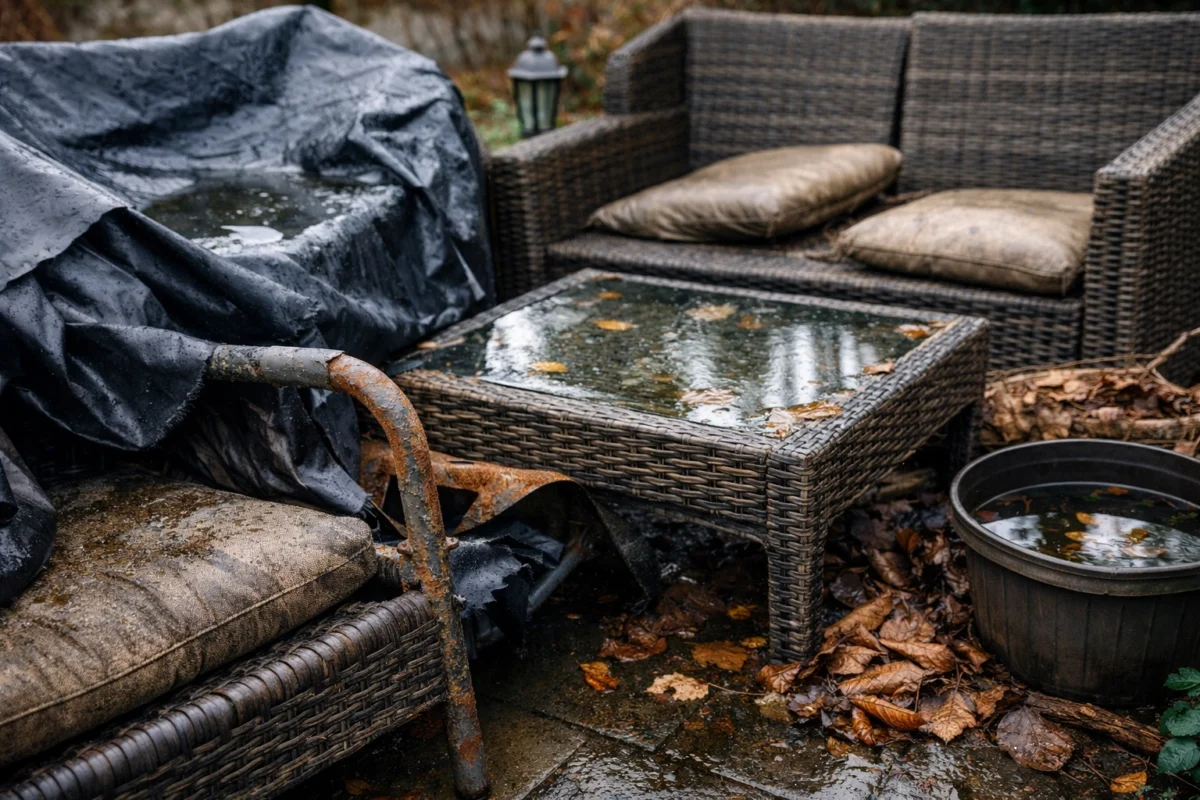
The first big mistake is assuming that “outdoor” means “maintenance-free”. That word often leads buyers into a false sense of security. Weather-resistant does not mean weather-proof forever. Outdoor materials still benefit from cleaning, covering, checking and sensible placement.
The second mistake is forgetting the frame. Many people focus on the woven surface because that is what they see, but the frame matters just as much. If moisture gets into poor-quality steel components or weak fixings, the weave may still look presentable while the structure underneath begins to fail.
Another mistake is thinking all covers are equally useful. A cheap, badly sized cover that rubs constantly, traps condensation or leaves the base open to pooling water may protect the top while quietly harming the rest. Fit, airflow and drainage all matter.
Finally, people often leave furniture exactly where it was enjoyed in summer, even when that spot becomes problematic in winter. A location that feels ideal for sunshine and entertaining may become too exposed once seasonal winds, damp shade and debris enter the picture.
Style and Practicality Tips: Making Outdoor Furniture Last Without Losing the Look
One reason rattan furniture remains popular is that it balances comfort, texture and visual warmth. People do not choose it only for practicality. They choose it because it softens outdoor spaces and makes them feel inviting. That is why winter care should not feel like a purely technical subject. It is also about preserving atmosphere. A well-kept rattan set still looks elegant when the season changes, and that continuity matters in how a home feels.
A simple styling idea is to think seasonally. In warmer months, cushions, throws and lanterns create softness. In colder months, the visual goal shifts toward neatness and protection. Removing textiles, cleaning the lines of the furniture and storing accessories well can make your patio or garden look intentional instead of abandoned. This is where woven storage has a practical role too. Keeping soft furnishings, covers or seasonal accessories organised in well-made woven home storage can make the whole transition easier and tidier.
The broader lesson is that people trust materials that are looked after. Whether it is furniture outdoors or woven pieces indoors, care creates longevity and visual confidence. The same appreciation for woven texture that makes people love rattan furniture often carries into home organisation choices such as baskets, hampers and decorative storage. When a house feels coherent in its materials, it feels calmer and more considered.
Expert Perspective: The Real Question Is Not “Can It Stay Out?” but “How Well Is It Protected?”
A lot of thin content on this topic fails because it treats the question too literally. In reality, furniture care is not binary. The better question is whether your rattan furniture is likely to come through winter in good condition, with appearance, comfort and lifespan largely preserved. That is a more useful question, and it leads to more useful decisions.
A careful homeowner might leave synthetic rattan out and have excellent results. A careless homeowner might do the same and be disappointed by spring. The difference is rarely luck. It usually comes down to material quality, cover choice, moisture control, cushion storage, inspection and placement. Once you see it that way, the subject becomes much easier to manage.
Helpful Video: Outdoor Furniture Winter Care 🎥
If you would like a practical visual companion to the advice above, this video is a useful addition:
A good video can improve the reading experience because it lets visitors pause, compare advice, and stay longer on the page while exploring the topic in a more visual way.
Final Verdict Before the FAQ
So, can rattan furniture be left out in winter? Yes, if it is outdoor-grade synthetic rattan and you protect it properly. If it is natural rattan, or if your outdoor conditions are harsh and unmanaged, then the safer answer is no. Winter itself is not always the enemy. Unchecked moisture, poor preparation and unsuitable material are usually the real reasons furniture ages badly.
The most reliable mindset is not to gamble on durability, but to support it. Clean the furniture, dry it thoroughly, store cushions, choose breathable protection and check it from time to time. Those habits are simple, realistic and far more effective than hoping for the best.
FAQ: Can Rattan Furniture Be Left Out in Winter?
Can natural rattan furniture stay outside in winter?
In most cases, no. Natural rattan is better kept indoors or in a dry sheltered space during winter. It is more vulnerable to prolonged damp, cold and mould-related damage than synthetic outdoor rattan.
Is synthetic rattan weatherproof?
Synthetic rattan is usually weather-resistant rather than permanently weatherproof. It is designed for outdoor use, but it still lasts longer when cleaned, covered properly and checked through the colder months.
Should I cover rattan furniture in winter?
Yes, in most cases a breathable outdoor cover is a smart choice. It helps protect against rain, dirt and seasonal wear, provided the furniture is dry before you cover it and the cover allows enough airflow.
Can rattan furniture get mouldy in winter?
Yes, especially if moisture becomes trapped under cushions, covers or in sheltered but damp areas. Mould risk increases when furniture is left dirty, wet or unventilated for long periods.
Do I need to bring rattan cushions inside?
Yes, that is usually the best approach. Even if the frame remains outside, bringing cushions indoors keeps them fresher, drier and easier to maintain.
What is the biggest mistake people make with outdoor rattan in winter?
One of the biggest mistakes is covering furniture while it is still damp. Another is assuming that all rattan is the same and failing to distinguish between natural rattan and synthetic outdoor rattan.
How often should I check outdoor rattan furniture in winter?
A quick check every few weeks is usually enough. After storms or long wet spells, it is wise to make sure the cover is secure, the base is dry, and no debris or standing water is building up around the furniture.
Can freezing temperatures damage synthetic rattan?
They can contribute to wear over time, especially on lower-quality products or pieces already under stress. Better-quality outdoor rattan usually copes much better, but winter protection still helps preserve its condition.
Conclusion
Leaving rattan furniture outside in winter is not automatically a problem, but it is never a question that should be answered carelessly. The right answer depends on the material, the build quality, the location and the protection you provide. If you understand those factors, you can make a confident decision that protects both your furniture and your budget. ❄️
In the end, the best winter care is not complicated. It is thoughtful. And thoughtful care is exactly what helps woven materials keep their beauty, structure and usefulness season after season.
