
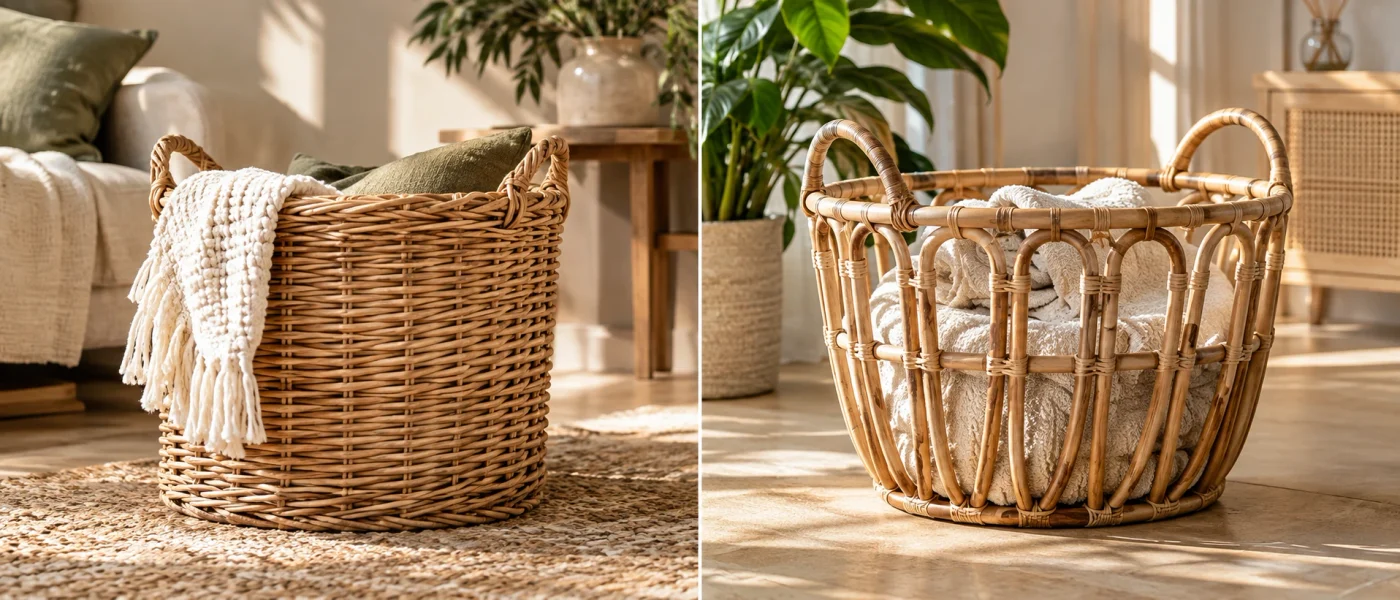
If you are comparing wicker baskets and rattan baskets, the first question is usually very simple: which one will actually last longer? At first glance, the answer seems obvious because both look natural, woven and decorative. However, the reality is more nuanced. Wicker and rattan are not exactly the same thing, and their lifespan depends heavily on where you use the basket, what it carries, how often it is moved, and how well it is maintained.
In most homes, a well-made rattan basket can last for many years indoors, especially when it is kept dry and away from harsh sunlight. But “wicker” can also last a very long time because wicker is not a single material. It is a weaving technique. A wicker basket can be made from rattan, willow, bamboo, reed, seagrass or even synthetic fibres. That means the real answer is not simply “wicker” or “rattan”; it depends on the exact material behind the weave.
This guide will give you a clear, practical answer so you can choose the right basket for your home, your storage needs and your budget. We will compare durability, moisture resistance, daily use, weight, maintenance and long-term value, with examples that make sense for real rooms such as bathrooms, bedrooms, laundry rooms, living rooms and hallways. 🧺
Quick Answer: Which Lasts Longer?
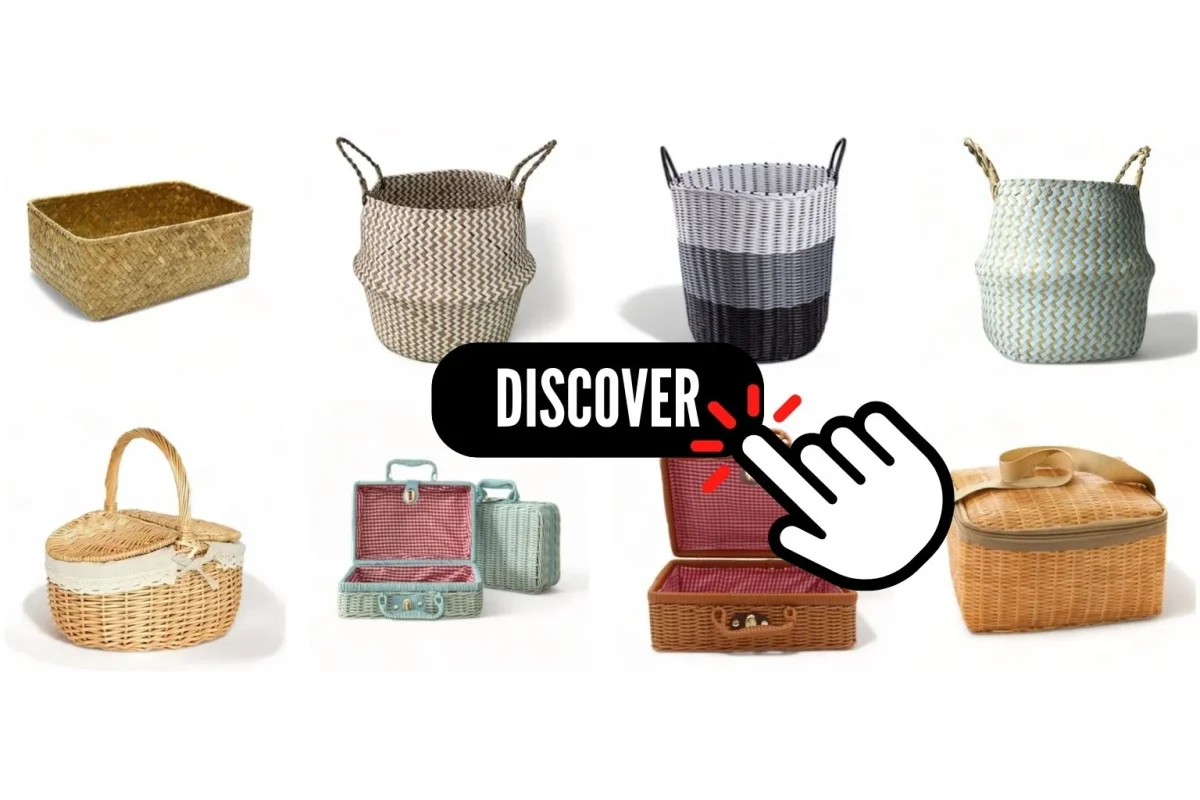
Indoors, high-quality rattan often lasts longer than many ordinary natural wicker baskets, because rattan is naturally strong, flexible and structurally reliable. It performs especially well in dry, stable environments such as bedrooms, living rooms, dressing rooms and hallways. If the basket is not overloaded, not left in damp corners and not exposed to direct sunlight every day, rattan can remain attractive and usable for years.
However, wicker can last just as long or even longer if it is made from a durable material and woven tightly. Since wicker describes the weaving method rather than the material itself, a wicker basket made from strong rattan may last much longer than a cheaper rattan-look basket made from weak fibres. This is why product quality matters more than the label alone.
For daily home storage, the best answer is this: rattan is usually stronger as a natural material, while wicker durability depends on what it is woven from. If you want a basket for light decorative storage, both can work beautifully. If you want a basket for heavy use, look at the thickness of the weave, the strength of the handles, the base construction and whether the material is protected against humidity.
Wicker vs Rattan: The Difference That Changes Everything
Before comparing lifespan, it is important to understand the real difference between the two terms. Rattan is a natural material. It comes from climbing palm plants and is known for being lightweight, flexible and strong. Because of this, rattan has been used for furniture, baskets and decorative home accessories for a very long time.
Wicker, on the other hand, is not a material. Wicker refers to the weaving technique. When thin fibres are woven together to create a basket, chair, tray or storage piece, the result can be called wicker. The fibres used may be natural or synthetic. This is why a basket can be both wicker and rattan at the same time: it can be made from rattan using a wicker weaving technique.
This distinction matters because many buyers compare the two as if they were direct competitors. In reality, the comparison is more like asking whether “wood” lasts longer than “carpentry”. One describes the substance; the other describes the method. A tightly woven wicker basket made from strong rattan will usually last longer than a loosely woven decorative basket made from weaker natural fibres.
If you want to go deeper into this distinction, you can read our full guide on the difference between wicker and rattan baskets. It explains the terminology in a simple way and helps you avoid choosing the wrong basket for your home.
Wicker vs Rattan Durability Comparison
The easiest way to compare them is not only by name, but by real-life use. A basket that sits quietly in a bedroom holding scarves does not face the same stress as a basket used every day for laundry, toys, blankets or bathroom towels. Durability is always a combination of material, weave, environment and weight.
| Feature | Rattan Basket | Wicker Basket |
|---|---|---|
| Meaning | A natural material from palm plants | A weaving technique using natural or synthetic fibres |
| Indoor lifespan | Very good when kept dry and cared for | Varies depending on the material used |
| Strength | Usually strong, flexible and reliable | Can be strong if tightly woven from quality fibres |
| Moisture resistance | Moderate; dislikes constant dampness | Depends on the fibre; natural wicker also dislikes humidity |
| Best use | Living room, bedroom, hallway, decorative storage | Storage, laundry, shelves, bathroom accessories, décor |
| Maintenance | Needs gentle cleaning and dryness | Needs dusting and protection from dampness |
| Best long-term value | Excellent if the build quality is high | Excellent if the weave and material are strong |
This table shows why there is no universal winner. A strong rattan basket can outperform a weak wicker basket. But a well-made wicker basket, especially one with a reinforced base and solid handles, can easily outperform a poorly made rattan basket. The label helps, but construction decides the lifespan.
Video: Wicker vs Rattan Explained 🎥
If you prefer a visual explanation, this YouTube search will help you see the difference between wicker and rattan in real examples:
A video is useful because the difference is often easier to understand visually. Once you see the weave, the frame, the fibres and the finish, it becomes much easier to judge whether a basket is made for long-term use or simply for decoration.
Which One Lasts Longer Indoors?
Indoors, rattan is usually one of the best natural choices. It is light enough to move easily, but strong enough for repeated use. In a bedroom, living room or entrance hall, a good rattan basket can stay beautiful for years because it is protected from rain, extreme humidity and aggressive sunlight.
Indoor wicker baskets can also last a very long time, especially when they are used for lighter storage. For example, a wicker basket used for throws, cushions, magazines, toys or accessories may experience very little stress. If the weave is tight and the basket is not dragged across rough floors every day, it can keep its shape and charm for a long period.
The main advantage of rattan indoors is its natural flexibility. Instead of snapping immediately under pressure, good rattan can bend slightly. This makes it practical for baskets that are picked up, moved and filled regularly. However, if the rattan becomes too dry over time, it can become brittle, especially when placed close to radiators or direct sunlight.
Wicker baskets, depending on the fibre used, may be more decorative or more practical. Some are designed mainly for visual warmth and texture, while others are made for storage. This is where the buying decision becomes important: a decorative basket can look beautiful but may not be the best choice for heavy everyday storage.
Which One Lasts Longer in Bathrooms and Laundry Rooms?
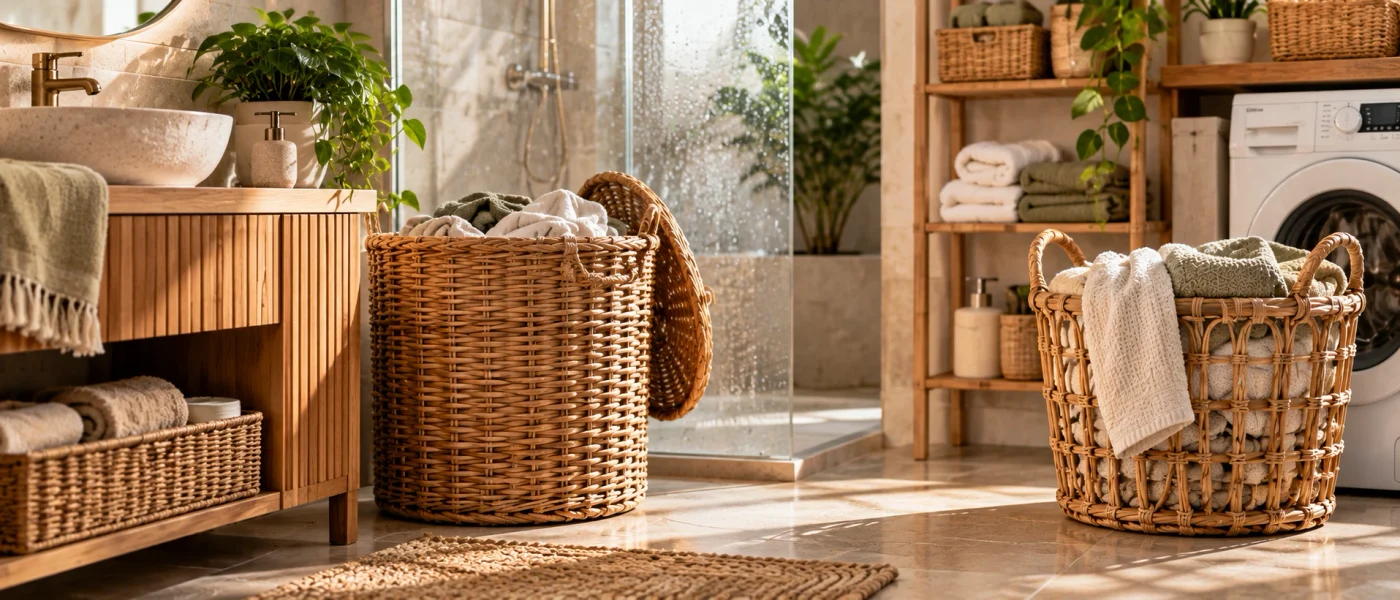
Bathrooms and laundry rooms are more demanding because they involve moisture, steam and repeated handling. In these spaces, humidity is usually the biggest enemy of natural woven baskets. Both rattan and natural wicker can suffer if they stay damp for too long. The fibres may swell, soften, weaken or develop unpleasant odours if airflow is poor.
For laundry use, the most important factors are not only the material, but also the shape, ventilation and handle strength. A laundry basket is lifted, filled, emptied and moved often. That means weak handles will usually fail before the main body of the basket. If you want a practical option for this kind of use, a dedicated wicker laundry basket is usually more suitable than a purely decorative basket.
A basket in a bathroom should ideally be kept away from direct splashes. It can hold rolled towels, toilet rolls, skincare products or spare textiles, but it should not sit permanently on a wet floor. If the room has good ventilation, both wicker and rattan can work well. If the bathroom is small, damp and poorly ventilated, you should choose a basket with a raised base, an open weave or a liner that can be removed and dried.
In short, for damp rooms, the longest-lasting basket is the one that dries quickly. A beautiful natural basket can still be a good choice, but it needs air circulation and sensible placement.
Which One Handles Daily Use Better?
Daily use changes everything. A basket that looks perfect on a shelf may not perform well when used by a busy family every day. The more often a basket is lifted, pushed, carried or filled, the more important construction becomes.
Rattan is often excellent for daily use because it combines strength with lightness. This makes it practical for baskets that need to move from room to room. A rattan basket can work well for blankets, clothes, accessories, toys or general storage, as long as the load is reasonable and evenly distributed.
Wicker baskets can also handle daily use, but you need to check the weave closely. A tight, regular weave usually suggests better durability than a loose, uneven weave. The bottom of the basket matters too. If the base bends too much when the basket is full, it may lose shape over time. If the handles feel thin, dry or poorly attached, they may be the first part to break.
A useful rule is this: for heavy items, choose structure; for decorative storage, choose style. Books, laundry, shoes and toys need stronger baskets. Scarves, cushions, towels and decorative accessories allow more flexibility.
Real-Life Examples: Which Basket Should You Choose?
The right choice depends less on the word “wicker” or “rattan” and more on the job the basket must do. Here are some practical examples that make the choice clearer.
| Use Case | Best Choice | Why |
|---|---|---|
| Blankets in the living room | Rattan or strong wicker | Light use, decorative, easy to move |
| Daily laundry | Reinforced wicker laundry basket | Needs handles, ventilation and structure |
| Bathroom towels | Open-weave wicker or rattan | Airflow helps reduce trapped moisture |
| Children’s toys | Strong wicker with smooth edges | Needs to resist pulling, dragging and frequent use |
| Decorative shelf storage | Either wicker or rattan | Low stress, mainly visual use |
This kind of comparison is important because many people buy baskets based only on appearance. A basket can look perfect in a photo but still be wrong for the room. Before buying, imagine how it will actually be used. Will it be lifted every day? Will children pull it out? Will it hold heavy objects? Will it sit near moisture? The honest answer to those questions will tell you more than the product name alone.
How to Spot a Basket That Will Last
A long-lasting basket usually has visible signs of quality. You do not need to be an expert; you simply need to look carefully at the details. First, check the weave. A tight and even weave usually means the basket will hold its shape better. Large gaps, loose fibres or uneven tension can suggest weaker construction.
Next, look at the base. The base is one of the most important parts of any basket because it supports the entire load. A good base should feel firm, balanced and stable. If the basket rocks, bends too much or feels fragile when empty, it may not perform well when filled.
Handles are another key durability point. Many baskets do not fail because the woven body breaks; they fail because the handles loosen, split or detach. If you plan to carry laundry, toys, logs, shoes or household items, choose handles that feel integrated into the structure rather than simply added on top.
Finally, touch the material. Good natural fibres usually feel firm but not excessively brittle. If the fibres already feel dry, cracked or rough before use, they may age faster. A basket should feel strong, flexible and well finished.
Design Advice: Choosing a Basket That Looks Good for Years 🏡
Durability is not only about whether a basket physically survives. It is also about whether you still like it after several years. Natural woven baskets are popular because they age more softly than many plastic storage boxes. They add warmth, texture and a relaxed feeling to a room.
For a calm interior, choose light natural tones and simple shapes. These work well in bedrooms, bathrooms and minimalist living rooms. For a warmer, more rustic look, darker rattan or thicker wicker can bring more character. If your home has wooden floors, linen curtains, neutral walls or soft textiles, woven baskets usually blend in very naturally.
A good styling trick is to repeat natural textures in small doses. For example, one basket near the sofa, one in the hallway and one in the bedroom can make the home feel more connected without looking overloaded. The goal is not to fill every corner with baskets, but to use them where they are both useful and visually warm.
“A basket lasts longer in a home when it has a clear purpose. The more naturally it fits your routine, the less likely you are to replace it.”
How to Make Wicker and Rattan Last Longer
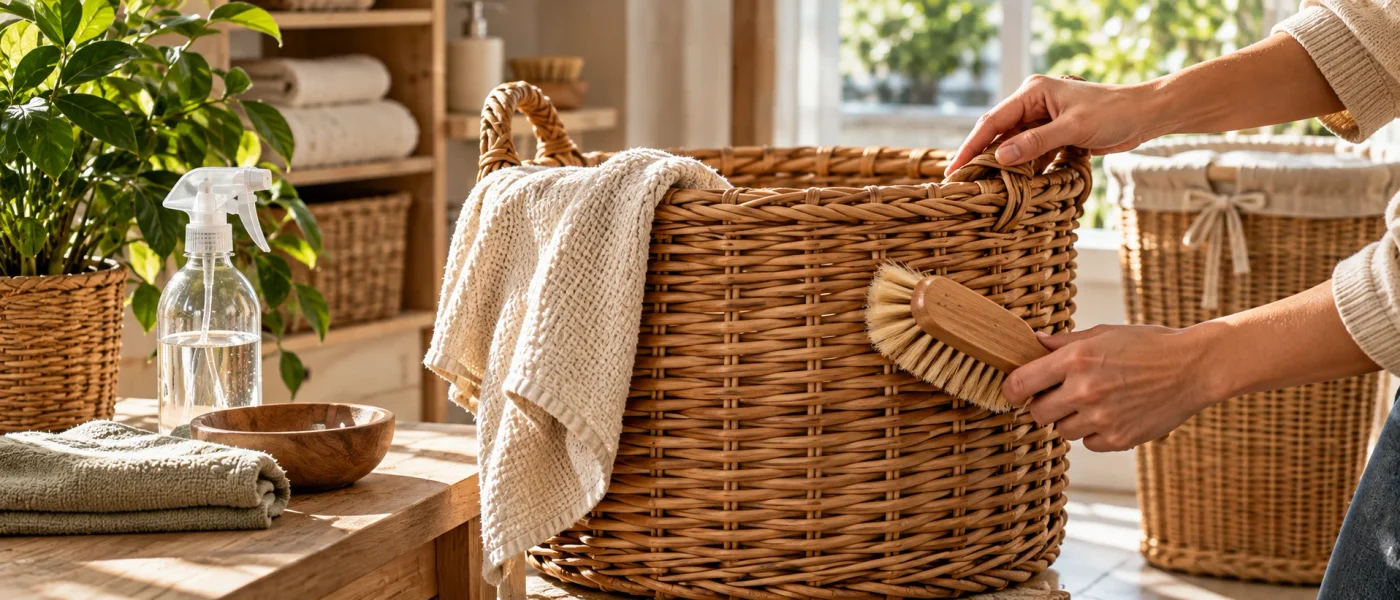
Whether you choose wicker or rattan, maintenance has a huge impact on lifespan. The good news is that care is simple. You do not need complicated products or professional cleaning. Most baskets only need regular dusting, gentle cleaning and protection from extreme conditions.
1. Keep the Basket Dry
Moisture is one of the biggest reasons natural baskets age badly. If a basket gets wet, let it dry completely before using it again. Do not leave damp towels, wet clothes or cleaning cloths inside for long periods. In bathrooms and laundry rooms, make sure air can circulate around the basket.
2. Avoid Strong Direct Sunlight
Natural fibres can dry out and fade when exposed to strong sunlight every day. A little light is usually fine, but placing a basket directly in front of a sunny window for months can make it brittle over time. If you notice the fibres becoming pale, dry or cracked, move the basket to a softer light area.
3. Do Not Overload It
Even a strong basket has limits. Heavy books, tools, bottles or dense items can distort the base and weaken the handles. If you need to store heavy objects, choose a basket with a reinforced structure and avoid carrying it by one handle only. Use both hands and support the base when possible.
4. Dust the Weave Regularly
Dust can collect between woven fibres. Use a soft brush, a dry cloth or a vacuum with a gentle brush attachment. Regular dusting keeps the basket looking cleaner and prevents dirt from settling deep into the weave.
5. Use Liners for Laundry or Textiles
A removable liner can protect the inside of the basket from moisture, dust and fabric friction. It is especially useful for laundry baskets, nursery baskets or bathroom storage. A liner also makes cleaning easier because you can wash the fabric separately.
Common Mistakes That Shorten Their Lifespan
Most wicker and rattan baskets do not fail because they are bad products. They fail because they are used in the wrong way. One common mistake is placing a natural basket directly on a damp bathroom floor. Even if the basket looks fine at first, repeated moisture can slowly weaken the fibres.
Another mistake is using a decorative basket for heavy-duty storage. A delicate basket may be perfect for towels, throws or accessories, but not for heavy laundry loads, shoes or children’s toys. If a basket is pulled, dragged or overloaded every day, it needs stronger construction.
People also often ignore the handles. If a basket is full, lifting it quickly by one handle creates uneven pressure. Over time, this can loosen the weave around the handle area. For heavy loads, lift carefully and support the base.
Finally, avoid harsh cleaning. Natural fibres do not need aggressive chemicals. Too much water, bleach or strong detergent can damage the finish and weaken the material. A lightly damp cloth is usually enough for small marks.
Wicker or Rattan: Which Is Better Value?
The best value is not always the cheapest basket. A low-cost basket that breaks after a few months is usually more expensive in the long run than a stronger basket that lasts for years. When comparing value, look at how often you will use it, where it will be placed and how much weight it needs to carry.
For decorative use, you can often choose based on appearance. If the basket will sit on a shelf and hold light items, you do not need the strongest construction available. But for daily storage, laundry or family use, paying more for a better weave and stronger handles is usually worth it.
Rattan often offers excellent value indoors because it combines strength, beauty and lightness. Wicker offers great value when the weaving is well made and the material suits the purpose. In both cases, the best basket is the one matched to the right use.
FAQ: Wicker and Rattan Lifespan
Does wicker last longer than rattan?
Not automatically. Wicker is a weaving technique, while rattan is a material. A wicker basket made from strong rattan can last a very long time, but a wicker basket made from weaker fibres may not last as long. The lifespan depends on the material, weave quality, room conditions and daily use.
Does rattan last a long time?
Yes, rattan can last a long time indoors when it is kept dry, cleaned gently and protected from harsh sunlight. It is naturally strong and flexible, which makes it a good choice for baskets and home storage. However, constant moisture or overloading can reduce its lifespan.
Is wicker good for everyday storage?
Wicker can be excellent for everyday storage if the basket is well made. Look for a tight weave, a strong base and secure handles. For light storage such as towels, blankets and accessories, wicker works very well. For heavy daily use, choose a basket specifically designed for carrying and repeated movement.
Can wicker and rattan baskets be used in bathrooms?
Yes, but with care. Bathrooms are humid, so natural baskets should not sit in wet areas or hold damp textiles for too long. Choose an airy weave, keep the basket away from direct splashes and allow it to dry properly. Good ventilation will help the basket last longer.
Which is better for laundry: wicker or rattan?
For laundry, the best option is usually a basket designed specifically for that purpose. It should have good ventilation, strong handles and a stable base. Both wicker and rattan can work, but the structure matters more than the name.
Why do some wicker baskets break quickly?
Wicker baskets often break quickly when they are loosely woven, made from weak fibres, overloaded or exposed to too much moisture. Handles and bases are usually the first weak points. Choosing a better-constructed basket and using it for the right purpose can greatly improve lifespan.
How can I tell if a basket is good quality?
Check the weave, base and handles. A quality basket usually has even weaving, firm structure, smooth finishing and handles that feel securely integrated. If the basket feels unstable, brittle or poorly balanced when empty, it may not last well under daily use.
Can I repair a wicker or rattan basket?
Small loose fibres can sometimes be tucked back into place or lightly secured, depending on the construction. However, broken handles, cracked bases or widespread fibre damage are harder to repair. Prevention is usually better than repair: keep the basket dry, avoid overloading it and handle it gently.
Which basket is best for a natural home style?
Both wicker and rattan are excellent for natural interiors. Rattan often gives a warm, structured, organic look, while wicker can feel softer and more decorative depending on the weave. For a timeless home style, choose neutral tones and simple shapes that will not go out of fashion quickly.
Final Verdict: What Lasts Longer, Wicker or Rattan?
So, what lasts longer, wicker or rattan? The most accurate answer is: high-quality rattan often lasts longer indoors, but well-made wicker can last just as long when the right material and weave are used. Rattan has natural strength and flexibility, while wicker depends on the fibres used and the quality of the weaving.
If you want a basket for a dry living room, bedroom or hallway, rattan is an excellent long-lasting choice. If you want storage for laundry, towels or daily household use, choose based on construction: strong handles, a reinforced base, tight weaving and good ventilation. In real life, these details matter more than the label.
The best basket is not simply the one that looks attractive on day one. It is the one that still feels useful, stable and beautiful after months or years of use. Choose the right basket for the right room, care for it properly, and both wicker and rattan can become durable, stylish and practical pieces in your home. 🧺
